As you can see by now, I adore alliteration. I know that all advice from successful writers is to Avoid Alliteration Always, but the way the words complement each other, typing it or saying it out loud is rather satisfying to me. Then again, maybe I need to get out more.
Speaking of which, the husband and I saw that the weather was good on the weekend – a balmy 15C – and decided to embrace The Sunday Drive.
Long beloved of families across Australia, especially in the 1970s, we wanted to start and maintain this tradition because Tasmania is chock-full of things to see, do, taste, walk on, photograph, swim in, oooh and aaaaah at and is a large part of why we decided to settle here after 12 years overseas.
Our first foray was a modest one. Go and see the Richmond bridge, have a wander up the main street for a coffee and then get back into the car to the Bangor vineyard. Yes, we both like our wine, especially Aussie varieties (take THAT, France!) and decided to have a little peek and a nice lunch.
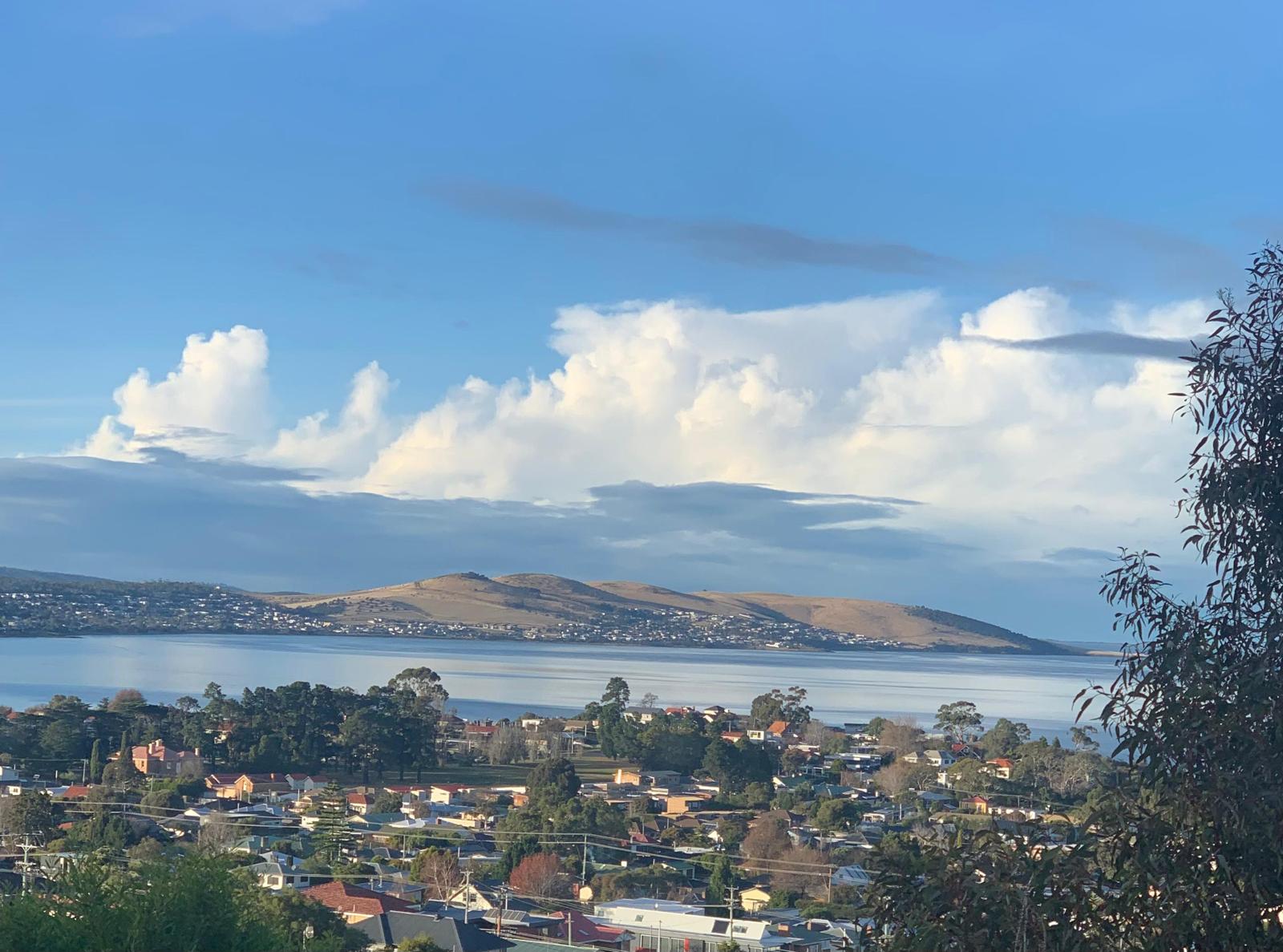
On the way, the landscape fascinated me. The rolling hills, paddocks and gum trees were uniquely Australian. The grey-green of the foliage is not seen anywhere else and it’s impossible to think you’re anywhere but our big brown land.
Glancing over to the left, I adjusted my optician-prescribed-but-very-smeared sunnies and said to Craig* “Oooooh look! There’s a whole mob of kangaroos!”
He quickly flicked his head to the direction I was excitedly gesturing towards and said quietly, “Er, love…? Those are sheep. You’re looking at a paddock full of sheep.”
Aren’t you glad I’m allowed to drive around this big brown land of ours in glasses that were only upgraded and improved four weeks ago?
After laughing but also feeling rather blind, I then directed my attention to other forms of wildlife; some of them easily identified and others, not so much.
Roadkill. I had forgotten how many mangled mammals were left as furry features on Aussie country roads. In Switzerland and France, they certainly had signs warning us that deer might be crossing, but I never saw one, dead or alive.
Somewhat subdued, I reached for my phone and started compiling a list of the dearly departed. As we pulled into the main street of Richmond, my tally was:
- 2 small kangaroos (this time I knew they weren’t sheep)
- 1 possum
- 1 rabbit
- 1 brownish bird
- 2 small unidentifed brown-grey mammals. Not bandicoots, but creatures with long back legs, as if designed for cross country skiing.
Usually, I’ll attach a photo to each post, but seeing Skippy as a skidmark on the road didn’t seem like a very attractive proposition or one designed to improve your reading experience, so you’ll just have to trust my spotting and my counting skills.
Oh alright, I’ll attach a photo. Richmond bridge.
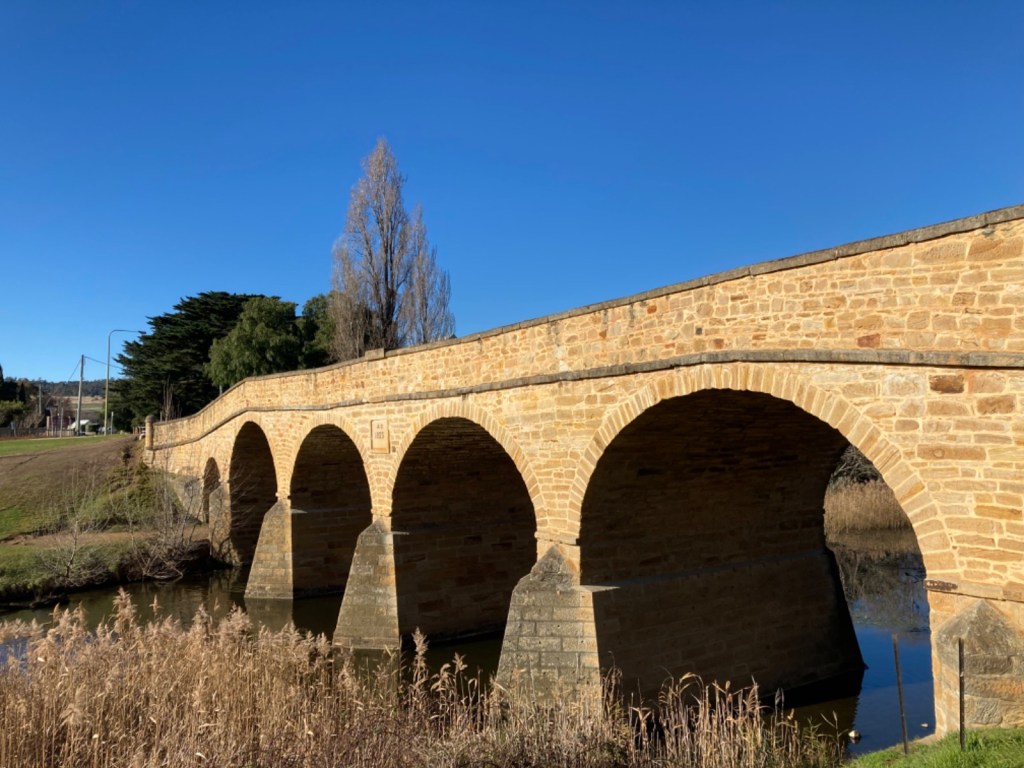
It’s a rather strange feeling to be happily pootling along what is called ‘The Convict Trail’ knowing that it was based in misery and cruelty. Where convicts were whipped and forced to carry the stones to build the bridge in wooden handcarts, there are now lovely green gardens, friendly ducks, pubs, gift shops and fudge makers.
Wikipedia tells me that the Richmond Bridge is the oldest stone span bridge in Australia and has a foundation stone dated 1823. I wonder if the convicts would be cheered up knowing that much later, their slave labour won them an Engineering Heritage Award. I think we can all guess the answer to that.
One interesting story concerning the bridge is that it involved a murder as it was being established. George Grover worked at the Richmond Gaol and was infamous for the enjoyment he derived from flogging the convicts. One night he had a few too many ciders and fell asleep on the bridge in a drunken stupor. Someone saw their opportunity to roll him into the water. No one was found guilty of this murder or manslaughter and perhaps not a great deal of effort was expended into trying to find them. A tiny bit of karma there.
As we drank our coffee in a twee little converted cottage, I wondered out loud to Craig what the local Aboriginal population thought when they saw these new white invader honkys treating each other so badly. That also was a sad indication of what was to come. I want to tread lightly here, because Tasmania is now my home, but its history is an incredibly sad and brutal one. Inescapable.
We drove off to Bangor in silence. Richmond was a beautiful little town and full of tourists on a wintry Sunday. The contrast of now and exactly two hundred years ago was a vast one, and the blister on my toe and Craig’s recurring asthma seemed incredibly minor. I want to see and appreciate this incredible state, but know that there’s a darkness to it, even if it’s hidden among the bed and breakfasts and playground with clean toilets. I see ‘joining a Historical Society’ appearing on my ‘to do’ list in the near future.


 Tentatively Tasmanian
Leave a reply to TamvdK Cancel reply