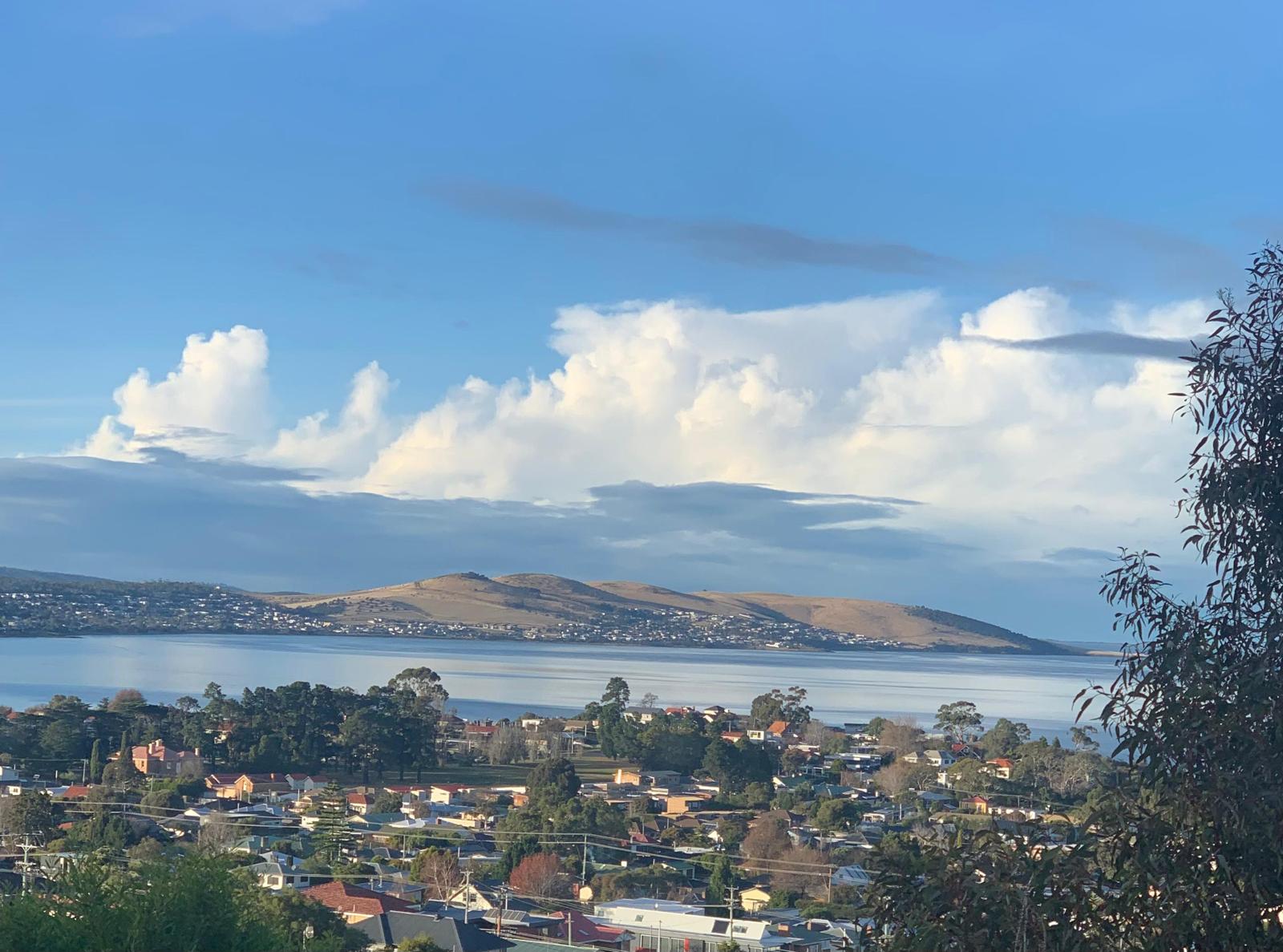
In keeping with our new Tasmanian tradition, Craig* and I drove to New Norfolk which is only about 32 kilometres away from Hobart.
The landscapes were incredible – it might be winter, but there is still the ‘dry’ look that only Australia has. Gum leaves are never tree-frog green, but stay a browny grey, no matter how wet the weather.
I’m going to rely a bit on good old Wikipedia here, and as it informed us that it won the Tasmanian Tourism Council ‘Top Tourist Town’ award in 2021, it ‘retains evidence of its pioneer heritage’ and ‘is colloquially known as “the antiques capital of Tasmania’ due to its proliferation of antique shops, it seemed like a good day out.
Before arriving in the town proper, we did pass the oldest continuously working hotel on the way. Built around 1815, the Bush Inn looked in operation, but not perhaps paying homage to its history or architectural features. Not unless pokies and counter lunches were in vogue then.
We drove on and I read some Wikipedia facts out loud to Craig. This little snippet really tickled our collective fancies: “The 1825 Heritage-listed Woodbridge on the Derwent, on the river next to the bridge, operates as a small luxury hotel, and is presently one of more than 10 5-star hotels in Tasmania,” and adds the following sucker punch, ”…… although the building is located only six metres from a major highway carrying log trucks 24 hours a day.” Ah.
Pulpit rock lockout provided a gorgeous view of the town with river flats hosting goats and sheep and a lovely old bridge crossing the Derwent.
The town is apparently ‘new’ Norfolk due to the resettlement of Norfolk Islanders. No reason is provided for their voluntary or involuntary settlement, but around 163 of them arrived in 1807 and quite understandably struggled to grow crops in the first few years due to the cold and wet climate. They were given land grants to stay there, which might have been reason enough to keep on trying.
Many of those determined peeps were ‘First Fleeters’ who had originally been transferred from Sydney to Norfolk Island. Considering that Norfolk Island was named after the Norfolk in the UK, surely New Norfolk in Tasmania should have been more accurately referred to as the New New Norfolk?
No matter. It’s a source of pride that the town received Australia’s first telephone trunk call, from Hobart to the Bush Inn Hotel. Perhaps a long distance order for a chicken parmi and a quinella on race seven.
Finding a park, we wandered up and down the main street in the drizzle and found two antique shops. They were a delight to look through, but we just did not have the $8,000 for the chunky 19thC cabinets on offer. Good old Banjo’s bakery was around the corner, and we felt a little bit guilty for having a coffee and (very dry) carrot cake there instead of the cute café that was overloaded with diners.
One of the ‘First Fleeters’ who found themselves in New New Norfolk, was Betty King (nee Thackery). Her grave was nearby and my interest in seeing it in the churchyard was dampened when Wikipedia informed me that she is most famous for being ‘the first white woman to set foot in Australia.’ Maybe that is notable, but it seems a bit unsettling and inappropriate in this age of recognising the genocide of Aboriginal people, especially in Tasmania.
When we got back home, I decided to check out ‘ol Elizabeth Thackery. She was born in 1767 in Manchester and married a bloke called Thomas Thackery when she was seventeen years old. Their marriage either ended officially or was annulled after she was arrested for stealing two black silk handkerchiefs and three white handkerchiefs, which only valued one shilling in total. That earned her the punishment of seven years transportation as a convict to Australia when she was just twenty one years old. She had to wear irons during several parts of the voyage and moved quarters to make way for livestock that were loaded at Cape Town. No wonder she was overjoyed to see land and jumped ship as soon as she sighted it at Sydney Cove, winning her the dubious fame of being the first white woman, etc.
Apparently there was much yahooing and cheering by the male guards and convicts watching her wade to shore which might not have been a good omen. (if you watch the movie ‘The Nightingale,’ which we did the night before we visited New Norfolk, a cheer from brutal and drunken men was definitely not the sort of welcome you’d wish on anyone).
Reasons are not provided as to why, after her seven years were completed, she wandered out of her agreed settlement and into a local town for a squizz, but she was given 25 lashes for doing so. She had been living with another freed convict, James Dodding, for about a year at that time, and we can only hope that he treated the wounds on her lacerated back with kindness and care.
Her beau had been found guilty of stealing a pair of linen sheets and pillow cases and was also sentenced to 7 years transportation, albeit to America. He was one of the prisoners who mutinied on the ship and, after he was recaptured, he was placed on a different ship and arrived in Sydney in 1788 as part of the First Fleet.
After he and Elizabeth separated in 1907, little is known of James other than by 1819 he was was no longer a farmer but working as a gaoler at Hobart. Did he provide more kindness to the prisoners than he was afforded himself?
Betty was still on the prowl and married Marine Private Samuel King of the First Marine Regiment, another First Fleeter who arrived aboard the warship ‘Sirius,’ when she was 43 years old. They were married for 46 years before he popped his clogs, which was a pretty good innings for those tough times.
But in New New Norfolk, we saw signs to ‘Willow Court.’ Established in 1827, Willow Court was originally called the New Norfolk Insane Asylum to accept mentally ill convicts and paupers from Hobart and Launceston.
To get there, we passed the local McDonald’s and were charmed by the contrasting double rainbow above it. The Golden Arches vs the Rainbow Arches? You decide.
Unsurprisingly, ‘Willow Court’ is now what it is referred to, after being previously renamed Lachlan Park and later, the Royal Derwent Hospital before closing down for good in 2000. There are valiant attempts to stage community events there and run a funky café and gift shop.
I did not have the appetite for the café but followed the signs to the ‘barracks’ which were originally the lunatic asylum accommodations. There was an art exhibition there, featuring works by Elizabeth Day, originally from Hobart and now living in Sydney.
The rooms had been left unadorned and appeared as though little changed since the ‘asylum’ days. Tiny, slotted doors were still inserted high up in the walls, many feet above the head of any patient and were apparently for ‘fresh air’. It was much colder inside than outside, and the bricks revealed several peeling layers of paint and the floorboards creaked with each tentative step.
In the smaller room at the end of the complex, the artist had placed large colourful balls of wool on the floor. It was shaped like a bed and the cheerful colours served to emphasise the gloominess of the room. Craig had already walked outside, having no interest in the art works or lingering any longer than he had to. The room had a heavy sadness to it, no matter what the wool was trying to achieve.
I stood there for several minutes, and a lady joined me. “This feels so sad,” I whispered. “I don’t know anything about art, but these colours just reinforce the misery that we can feel, that we know happened in this room.”
She introduced herself. Liz. The artist. She explained that she was trying to lift up the sadness, but I shook my head. “I think you’re amplifying it somehow. This room feels brutal.”
It was then that she admitted that we were standing in the mortuary.
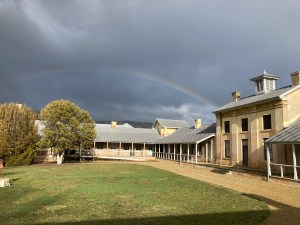
I thanked her for her time and left to join Craig. We, like dozens of others that day, had gone for a pleasant Sunday outing and were confronted with a forbidding and decaying complex of buildings that could not shake the anguish and suffering still felt there no matter what rebranding efforts had been attempted. I still find myself conflicted over the fascination of history but the torture and persecution of the many who had been there before made the dry carrot cake roil uncomfortably in my stomach.
The Willow Court/Derwent Valley Arts website states that it is a ‘rich and complex heritage site’ and that’s quite the understatement.
On a much less official website, a local group of history buffs warn that Willow Court is haunted and attracts paranormal ‘enthusiasts.’ In February 2011, the local council agreed to a paranormal investigation but as to who conducted it or what they found is not mentioned. Understandably, this rather odd decision was widely criticised by advocacy groups and descendants of those incarcerated there, as it was considered to ‘demonize’ previous residents and staff. The footnote states that no haunting claims have been verified by scientific experts to date. I am a sceptic, but both Craig and I did not think we’d like to take up a dare to spend a night in the mortuary room or any other part of ‘Willow Court’ for any sum of money.
Here’s hoping our next outing is a cheerier one.
* unless you’ve come from Facebook, Craig is to protect the innocent


 Tentatively Tasmanian
Leave a comment